
 By Callum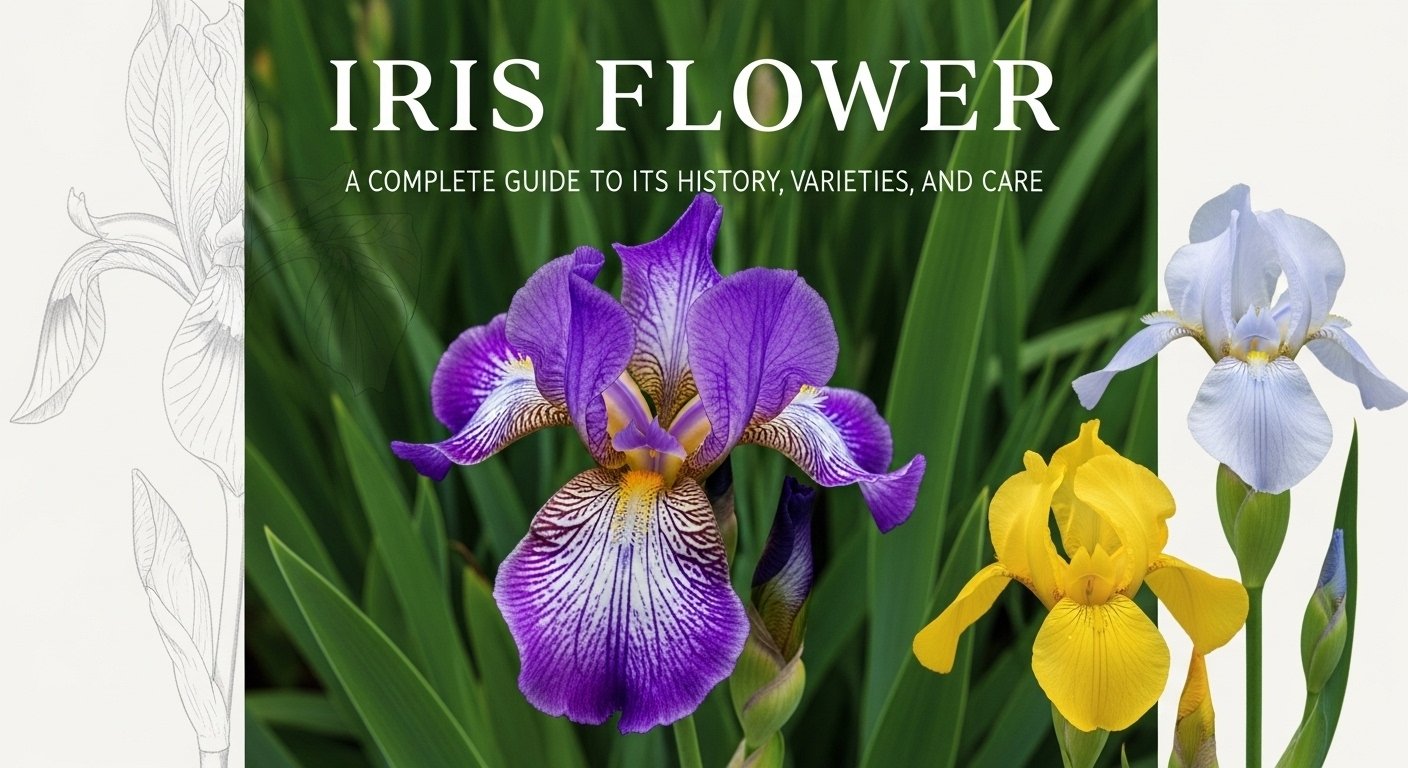
The iris captures attention with its striking architectural petals and vivid hues. Named after the Greek goddess who rode rainbows, this genus of flowering plants brings exceptional beauty to spring and summer gardens around the world. With over 300 species, the plant offers incredible diversity, thriving in a variety of climates and conditions.
Beyond its visual appeal, the iris carries deep meaning. It stands as a universal symbol of hope, wisdom, trust, and valor. When you give a purple iris, you convey deep respect and wisdom. A yellow bloom signifies passion, while white represents purity and innocence. Blue varieties often communicate hope and faith. Because of this rich symbolism, people have cultivated and gifted these blooms for centuries to express complex emotions that words often fail to capture.
This guide explores everything you need to know about this remarkable plant. We will examine its physical traits, dive into its cultural history, provide actionable tips for growing your own, and uncover how it has influenced art, medicine, and perfumery over the centuries.
Physical Characteristics, Varieties, and Colors
To understand the iris, you must first look at its unique anatomy. The flower features six distinct petals. The three upright inner petals are called “standards,” while the three downward-falling outer petals are known as “falls.” This distinctive structure creates a complex, almost sculptural appearance that catches the light and draws in pollinators like bees and hummingbirds.
Irises grow from two main types of underground structures: rhizomes and bulbs. Rhizomatous varieties grow from thick, fleshy, horizontally spreading stems that sit right at or slightly below the soil surface. Bulbous varieties grow from true bulbs, similar to tulips or daffodils, and require different planting depths and care routines.
Major Varieties
Bearded Irises: These are perhaps the most popular and recognizable. They feature soft, fuzzy “beards” along the center of their lower cascading petals (the falls). These beards help guide pollinators toward the pollen. Bearded varieties range in size from miniature dwarfs, which bloom early in the spring and stay under eight inches tall, to towering tall beardeds that can reach up to four feet.
Siberian Irises: A popular beardless variety, Siberian irises feature delicate, grass-like foliage and smaller, more graceful blooms. They naturally form dense clumps and are highly resistant to disease. These plants thrive in cooler climates and can handle wetter soil than their bearded cousins.
Japanese Irises: Known for their massive, flattened blooms, Japanese varieties provide a spectacular show in early to mid-summer. They require significant moisture, especially during their growing season, and prefer acidic soil. Their elegant, orchid-like appearance makes them a favorite near water features.
Dutch Irises: These grow from bulbs rather than rhizomes. Florists favor them because their sturdy stems and elegant, simple flower shapes make excellent cut flowers. You will often see them blooming in early summer, bringing bright splashes of blue, yellow, and white to garden beds.
A Rainbow of Colors
The plant’s name literally translates to “rainbow” in Greek, and it lives up to this title. You can find these flowers in nearly every color imaginable. Breeders have developed rich purples, brilliant yellows, deep burgundies, delicate pinks, and pure whites. Some varieties even feature complex patterns, with contrasting borders, speckled throats, or falls that feature entirely different colors than their standards. The only color truly missing from the natural iris spectrum is fire-engine red, though hybridizers continue to chase that elusive shade.
You Might Also Like: Klemroot Unveiled
Historical and Cultural Importance
The iris holds a prominent place in human history, weaving its way through the mythology, royalty, and culture of countless civilizations.
In Ancient Greece, the goddess Iris acted as a messenger for the gods, using the rainbow as her bridge between heaven and earth. The Greeks believed she escorted the souls of women to the Elysian Fields. To this day, people in Greece often plant these flowers on women’s graves to guide them to the afterlife.
Ancient Egypt also held the flower in high regard. King Thutmose III, after conquering Syria, brought back iris plants to cultivate in his gardens. The Egyptians viewed the flower’s three distinct petals as symbols of faith, wisdom, and valor. They frequently used the plant’s likeness in the architecture and murals of their palaces and temples.
Perhaps the most famous cultural application is the Fleur-de-lis. This stylized lily or iris design became the official emblem of the French monarchy in the 12th century. King Louis VII adopted it as his symbol during the Crusades, and it subsequently became deeply intertwined with French identity, royalty, and religion. You can still see the Fleur-de-lis on coats of arms, flags, and architectural details across Europe and North America.
In Japan, the flower carries different but equally profound cultural weight. The Japanese celebrate the plant during the early summer, particularly the Japanese iris (Iris ensata). Historically, they believed the flower held purifying properties that could ward off evil spirits. The traditional Boys’ Festival (now Children’s Day) heavily featured the plant, and people would bathe in water infused with its leaves to prevent illness and bring good fortune.
Tips for Growing and Caring for Iris Flowers
Despite their exotic appearance, these plants are remarkably hardy and easy to grow if you provide them with the right conditions. Whether you are a novice gardener or an experienced horticulturist, following a few fundamental practices will ensure vibrant blooms year after year.
Sunlight and Soil
Most varieties, particularly the bearded types, require full sun to thrive. They need at least six to eight hours of direct sunlight each day. If planted in heavy shade, they will produce lush foliage but very few flowers.
Soil drainage is critical, especially for rhizomatous types. Bearded varieties detest “wet feet.” If they sit in waterlogged soil, their fleshy rhizomes will quickly rot. Plant them in well-draining soil, and if your garden has heavy clay, consider building raised beds or amending the soil with sand and compost to improve aeration. Beardless types, like Siberian and Japanese varieties, are more forgiving of moisture and can thrive in consistently damp environments.
Planting Guidelines
When planting bearded rhizomes, the most common mistake is burying them too deep. The top of the rhizome should remain exposed to the sun and air, looking a bit like a potato half-buried in the dirt. Spread the roots out and downward into the soil, but leave the top bare.
Plant your rhizomes in late summer or early autumn. This timing allows the roots to establish themselves before the winter ground freezes. Space them 12 to 24 inches apart so they have room to multiply and get adequate air circulation, which prevents fungal diseases.
Watering and Fertilizing
Newly planted rhizomes need consistent moisture to establish their root systems. Once established, bearded varieties are surprisingly drought-tolerant. Water them deeply but infrequently during dry spells. Overwatering is far more dangerous than underwatering.
Apply a low-nitrogen fertilizer (like a 6-10-10 blend) twice a year: once in early spring when new growth appears, and again about a month after they finish blooming. Avoid high-nitrogen fertilizers, which encourage rapid leaf growth at the expense of flowers and can increase the risk of rhizome rot.
Dividing and Maintenance
Every three to five years, iris clumps will become crowded. When this happens, the center of the plant often stops producing flowers. To rejuvenate them, you must divide the rhizomes. Dig up the entire clump in late summer, cut away the old, dead center, and separate the healthy, younger rhizomes. Trim the leaves back to about six inches to reduce stress on the plant, and replant the new segments.
Keep your beds free of weeds and debris. Good air circulation prevents common issues like leaf spot and deters pests, specifically the iris borer. The iris borer is a caterpillar that tunnels into the leaves and down into the rhizome, introducing soft rot. Inspect your plants regularly and remove any leaves showing signs of tunneling.
Common Uses in Art, Medicine, and Perfumery
The iris has offered humanity much more than just garden beauty. Its unique form, scent, and chemical properties have made it a valuable resource across multiple industries and disciplines.
A Muse for the Masters
Artists have long been captivated by the plant’s structural complexity. The most famous examples are undoubtedly the works of Vincent van Gogh. During his time at the asylum in Saint-Rémy-de-Provence, he painted “Irises” in 1889. The painting captures the twisting, vibrant energy of the flowers and remains one of his most celebrated masterpieces.
Claude Monet also found endless inspiration in these blooms, planting them extensively in his famous garden at Giverny and capturing their reflections and shadows in his impressionist masterpieces. The flower’s bold shape makes it a favorite subject in Art Nouveau designs, appearing in stained glass, jewelry, and textile patterns from the late 19th and early 20th centuries.
Traditional Medicine
Historically, healers relied on the plant’s root for various medicinal applications. Native American tribes used certain native species to treat digestive issues, skin conditions, and swelling. In traditional Western herbalism, practitioners dried and powdered the rhizome to use as a diuretic, a mild laxative, and an expectorant for coughs and colds.
While modern medicine has largely replaced these historical remedies, the historical uses of the plant demonstrate its deep integration into human survival and comfort over the centuries. Note: Always consult a medical professional before ingesting any part of the plant, as some species and parts can be toxic to humans and pets.
The Magic of Orris Root in Perfumery
Perhaps the most fascinating commercial use of the plant lies in the fragrance industry. The dried rhizome of certain species—primarily Iris pallida and Iris germanica—is known as orris root.
Orris root does not smell like the flower itself. Instead, as it dries and ages (a process that takes three to five years), it develops a powdery, sweet scent remarkably similar to violets. Perfumers highly prize orris root absolute, known as “orris butter.” It requires tons of rhizomes to produce a tiny amount of this absolute, making it one of the most expensive ingredients in modern perfumery—often commanding higher prices than gold.
Beyond its own scent, orris root serves as an exceptional fixative in perfumes and cosmetics. It has the chemical ability to bind other volatile fragrances, preventing them from evaporating too quickly and helping the perfume last longer on the skin. You will find orris root acting as the base note in many high-end luxury fragrances produced today.
Conclusion
The iris is far more than a simple garden flower. It is a botanical masterpiece that carries the weight of ancient mythology, the elegance of French royalty, and the timeless beauty captured by legendary artists. Whether you grow a small patch of Dutch bulbs for spring bouquets or cultivate a massive border of bearded varieties, bringing these flowers into your life connects you to a rich, global history. By understanding their needs and respecting their heritage, you can enjoy the magic of these “rainbow” blooms season after season.