
 By Callum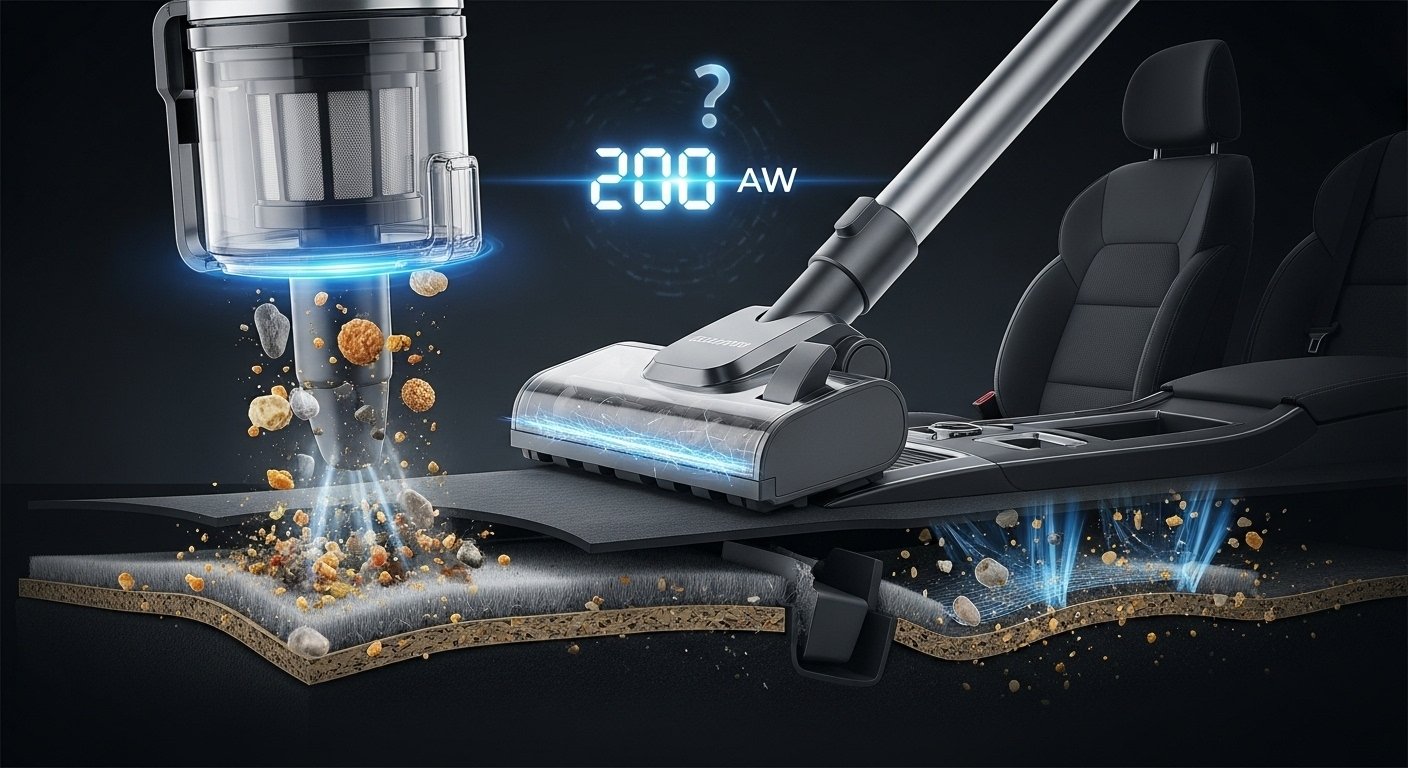
Walk into any auto store or scroll long enough online, and you will see the same thing repeated. Big suction numbers. Bigger promises. Phrases that sound powerful but do not always translate once you are crouched beside your car, trying to pull sand out of seat rails.
Most people buy a vacuum cleaner for a car from About Clean based solely on numbers. Watts. Air watts. kPa. It feels logical. More power must mean better cleaning. Right.
Not always.
Anyone who has properly cleaned a car’s interior knows there is more to it than meets the eye. A lot more. And this is where expectation and reality quietly drift apart.
The Reality of Car Interiors
Cars are awkward spaces. Tight angles. Mixed materials. Deep seams. Carpet that traps dust in ways your living room rug never will.
A car vacuum cleaner is not designed to fight open floor space. It is fighting gravity, friction, and poor access. That crumb under the seat rail is not impressed by suction numbers printed on a box.
It wants airflow. It wants agitation. It wants the right tool in the right spot.
This is why some high-powered machines disappoint, while smaller, well-designed units quietly do a better job.
Suction vs. Airflow. Not the Same Thing
Here is the part most marketing skips.
Suction measures how hard a vacuum can pull when airflow is restricted. Airflow is the volume of air that moves through the system.
Inside a car, airflow usually matters more.
A Vacuum Cleaner For cars with strong airflow can lift fine dust out of carpet fibres. It can carry debris through narrow hoses without clogging. It keeps performance steady rather than spiking briefly and then dropping off.
High suction with poor airflow often feels impressive at first. Then the hose blocks. Or the filter chokes. Or performance fades halfway through the job.
Attachments Do the Heavy Lifting
The unsung heroes of car cleaning are not motors. They are attachments.
A crevice tool that actually fits between seats. A brush stiff enough to lift pet hair without damaging fabric. A flexible hose that bends without collapsing.
A good vacuum cleaner for a car feels like an extension of your hand. Not a wrestling match.
This is where professional detailers quietly judge machines. Not by spec sheets. But by how easily they can reach awkward spots without swearing under their breath.
Filtration Changes Everything
Fine dust is everywhere in Australian cars. Road dust. Beach sand. Dry soil. It is lighter and finer than people expect.
A vacuum cleaner for a car with poor filtration may appear to be cleaning while quietly pushing dust back into the air. You notice it later. On dashboards. On glass. In your throat.
Good filtration keeps suction consistent and the interior actually cleaner. It also protects the motor, which is essential if the vacuum is used frequently.
Cordless Convenience Comes With Trade-Offs
Cordless vacuums are tempting. No cables. No setup. Quick clean.
They also drop power as batteries drain. Some more noticeably than others.
For light maintenance, a cordless vacuum cleaner for a car can be excellent. For deep cleaning, pet hair, or sandy carpets, limitations quickly become apparent.
This is not a dealbreaker—just something to be honest about.
Wet and Dry Capability Is Not a Gimmick
Spilled coffee. Wet shoes. Muddy mats.
A car vacuum cleaner that can handle moisture opens up more possibilities. It enables proper cleaning rather than blotting and hoping.
Not everyone needs this feature. But when you do, you really do.
Durability Matters More Than It Sounds
Car cleaning is rough on equipment. Tight bends strain hoses. Filters clog quickly. Motors work harder.
A Vacuum Cleaner For A car built for occasional home use may struggle with frequent cleaning. Heat buildup becomes an issue. Parts wear faster.
This is why professional setups often look overbuilt. They are designed to survive repetition. Not just one satisfying clean.
Noise Is Part of the Experience
Noise rarely factors into buying decisions until you use the vacuum early in the morning or in a closed garage.
Some vacuum cleaner models for cars balance power and noise better than others. It does not directly affect cleaning results. But it affects how pleasant the job feels.
And that matters more than people admit.
Maintenance Is the Hidden Cost
Filters need cleaning. Hoses need checking. Brushes clog.
An easy-to-maintain car vacuum cleaner is used more often. One that feels annoying slowly gets avoided.
That avoidance turns into dirty interiors, which defeats the purpose.
Why Cheap Options Disappoint Over Time
Cheap car vacuums often work well at first. Then suction drops. Plastic fittings crack. Filters become impossible to clean properly.
Replacing them repeatedly costs more than buying a solid vacuum cleaner for a car upfront.
It is not about buying the most expensive option. It is about buying one that matches how you actually clean.
What Actually Makes a Good Choice
The best vacuum cleaner for a car from About Clean is not defined by numbers alone. It is determined by balance.
Enough airflow. Sensible suction. Useful attachments. Decent filtration. Build quality that survives awkward angles and regular use.
When those things line up, cleaning a car stops feeling like a chore. It becomes routine. Almost satisfying.
And that is usually the real goal.