 By Callum
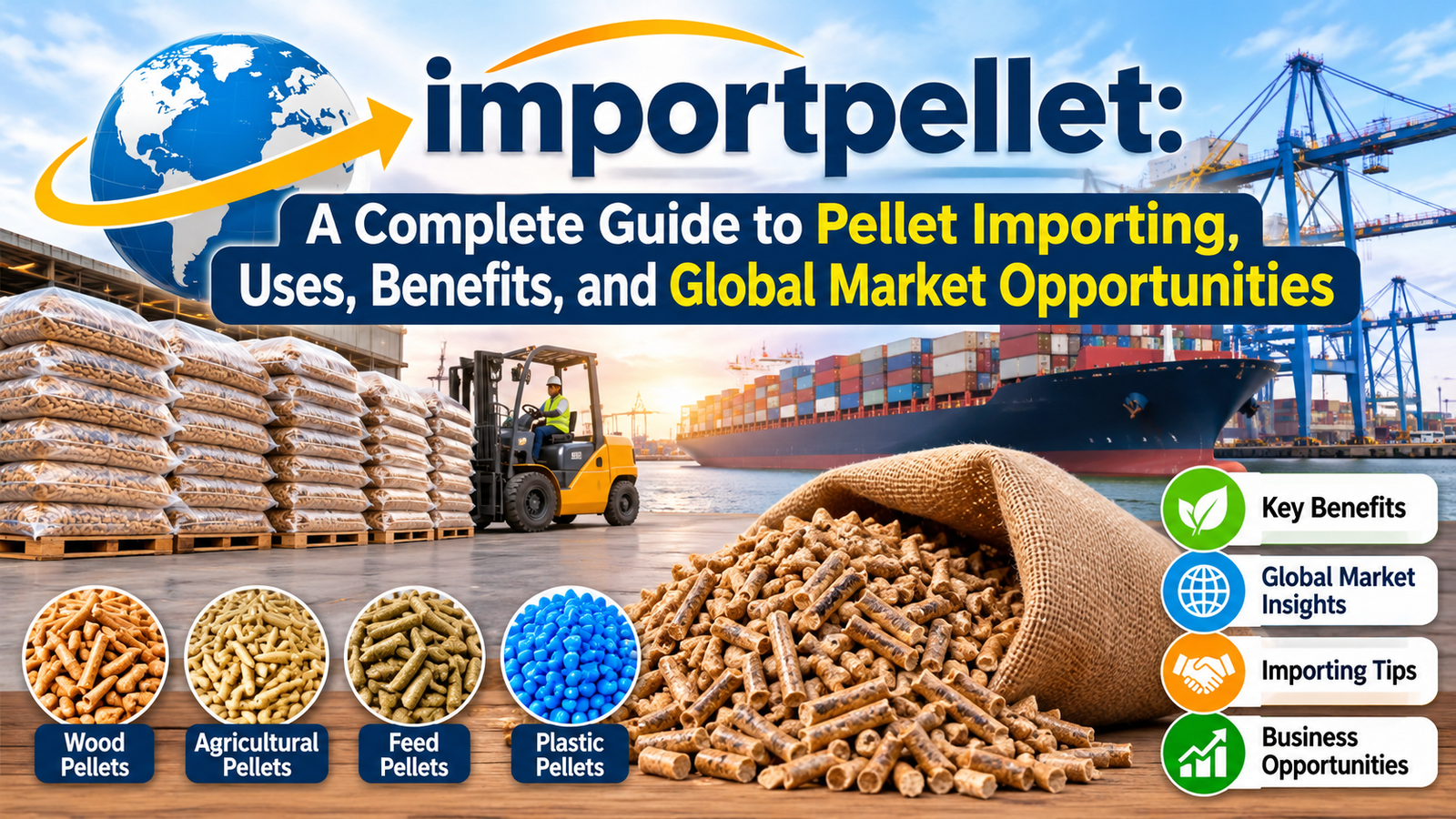
The global demand for sustainable energy, efficient heating solutions, and environmentally responsible materials has increased significantly in recent years. As businesses and consumers search for alternatives to traditional fuels, wood pellets and other types of biomass pellets have become increasingly important. In this growing market, the keyword importpellet can be associated with the international trade, purchasing, transportation, and distribution of pellet products.
Importing pellets involves more than simply purchasing materials from another country. It requires careful planning, product selection, supplier verification, transportation arrangements, quality inspections, and an understanding of international trade regulations. Whether pellets are intended for residential heating, industrial energy production, animal bedding, or agricultural applications, successful importing depends on choosing suitable products and reliable suppliers.
This article explores the meaning and potential applications of importpellet, the international pellet market, its benefits, challenges, and the factors businesses should consider before entering this industry.
1. Understanding the Concept of importpellet
The term importpellet combines the concept of importing with pellet-based products. It can describe the process of purchasing and bringing pellets from international manufacturers into a domestic market.
Pellets are small, compressed materials produced from different raw ingredients. Depending on their purpose, they may be manufactured using wood, agricultural waste, biomass, plastic, or other suitable materials.
Read: Why CPAs Are Indispensable During Mergers and Acquisitions
Wood pellets are particularly popular because they provide a convenient form of biomass fuel. They are commonly manufactured from sawdust, wood shavings, and other wood-processing residues.
For importers, understanding the product category is essential. Different pellets have different manufacturing standards, physical characteristics, storage requirements, and intended uses. Therefore, businesses should identify their target market before selecting suppliers.
2. What Are Pellets and How Are They Manufactured?
Pellets are compact cylindrical materials created by compressing smaller particles under controlled pressure. Their manufacturing process depends on the raw materials and the intended application.
For wood pellets, production generally involves several stages.
First, manufacturers collect suitable wood residues, including sawdust and wood chips. These materials are cleaned to remove unwanted substances.
Next, the raw materials are dried to achieve an appropriate moisture level. They are then processed into smaller particles before entering a pelletizing machine.
During pelletizing, pressure forces the prepared material through specially designed openings. The resulting pellets are cooled, screened, and packaged for storage or transportation.
This manufacturing process creates a relatively uniform product that can be handled more conveniently than loose biomass materials.
For importpellet businesses, understanding production methods helps evaluate product quality and identify manufacturers capable of meeting customer requirements.
3. Different Types of Imported Pellets
The international pellet industry includes several product categories. Each category serves different commercial and industrial purposes.
Wood Pellets: These are commonly produced from sawdust and other wood residues. They are widely used in residential heating systems, commercial boilers, and biomass power facilities.
Agricultural Biomass Pellets: These products are manufactured from agricultural materials such as straw, rice husks, corn stalks, and other plant residues. Their suitability depends on their chemical composition and combustion characteristics.
Animal Feed Pellets: Feed pellets are produced by compressing carefully selected nutritional ingredients. They are designed for livestock, poultry, fish, and other animals.
Plastic Pellets: Plastic pellets are small granules used as raw materials in manufacturing. They are commonly imported by businesses involved in plastic processing and product manufacturing.
Industrial Biomass Pellets: These pellets are manufactured for larger industrial applications, including certain heating and energy-generation processes.
Before importing any category, businesses should confirm that the product meets the technical requirements of its intended application.
4. Why Is the Global Demand for Pellets Increasing?
Several factors contribute to the growing international interest in pellet products.
One important factor is the demand for alternative energy sources. Many industries are exploring biomass fuels as part of broader efforts to diversify their energy supplies.
Another factor is the availability of agricultural and forestry residues. These materials can sometimes be converted into useful commercial products instead of being discarded.
Pellets are also easier to transport and handle than many loose raw materials because their compact form allows more organized storage and distribution.
In addition, improvements in pellet manufacturing technology have helped producers develop more consistent products.
These developments create opportunities for companies involved in importpellet activities, particularly those that can connect international manufacturers with local customers.
5. Major Benefits of Importing Pellets
Importing pellets can provide several advantages when businesses select appropriate suppliers and products.
Access to International Suppliers
Importers can purchase products from manufacturers in different countries. This creates opportunities to compare quality, production capacity, and commercial terms.
Product Availability
International sourcing can help businesses obtain pellet products that are unavailable or difficult to find in their domestic markets.
Competitive Purchasing Opportunities
Comparing suppliers from multiple countries may help businesses identify competitive prices. However, the total landed cost should always be considered rather than focusing only on the product’s original price.
Business Expansion
Importing can help distributors expand their product portfolios and serve additional customer groups.
Industrial Supply Opportunities
Manufacturers and energy businesses may benefit from establishing long-term relationships with international pellet producers.
These advantages depend on market conditions, shipping costs, product quality, and effective supply chain management.
6. How to Find Reliable International Pellet Suppliers
Supplier selection is one of the most important steps in the importpellet process.
A reliable supplier should demonstrate product knowledge, consistent manufacturing practices, transparent communication, and the ability to provide appropriate documentation.
Businesses can begin by researching established manufacturers and exporters through international trade directories, industry exhibitions, and professional business networks.
Before placing a large order, importers should request product specifications and samples whenever practical.
Important information includes:
- Product type and intended application.
- Raw material composition.
- Moisture content.
- Pellet dimensions.
- Ash content for applicable biomass products.
- Calorific value when relevant.
- Packaging specifications.
- Production capacity.
- Available quality certifications.
It is also important to verify the supplier’s business identity and export experience.
A careful evaluation can reduce the possibility of receiving unsuitable products or experiencing unnecessary commercial disputes.
7. Understanding Quality Standards
Quality plays a major role in the international pellet market.
For example, wood pellets used in heating systems may require particular standards for moisture, durability, ash content, and energy value.
Some markets recognize standards such as ISO 17225, which provides specifications and classifications for solid biofuels.
ENplus certification is another recognized quality certification system associated with wood pellets.
However, not every pellet product requires the same certification. Animal feed, plastic manufacturing materials, and agricultural biomass products have different quality requirements.
Importers should identify the standards applicable to their specific products and destination markets.
Requesting laboratory test reports and independent inspection documents can also provide additional confidence.
8. The Importpellet Importing Process
International pellet importing involves several connected activities.
Step 1: Market Research
Begin by identifying local demand, potential customers, competing products, and suitable price ranges.
Step 2: Product Selection
Choose the appropriate pellet category based on customer requirements and local regulations.
Step 3: Supplier Verification
Research potential manufacturers, review their business credentials, and request product information.
Step 4: Price Negotiation
Discuss product prices, minimum order quantities, payment terms, packaging, and delivery arrangements.
Step 5: Sample Evaluation
Whenever possible, examine product samples before confirming a commercial order.
Step 6: Shipping Arrangements
Choose an appropriate transportation method and agree on delivery responsibilities with the supplier.
Step 7: Customs Clearance
Prepare the necessary commercial invoices, packing lists, transport documents, certificates, and other documents required by the destination country.
Step 8: Final Distribution
After receiving and inspecting the shipment, arrange storage and distribution to customers.
Following a structured process helps businesses manage risks and maintain better control over international transactions.
9. Transportation and Logistics Considerations
Transportation is a major consideration when importing pellet products.
Wood and biomass pellets are frequently transported in containers, bulk shipments, or specialized packaging, depending on order size and destination.
Importers should consider shipping distance, freight charges, port handling fees, insurance, and delivery schedules.
Packaging is equally important. Pellets should be protected from moisture and physical damage during transportation.
Excessive moisture can negatively affect certain biomass pellets, potentially causing deterioration and reducing their usefulness.
Storage conditions should also be considered before a shipment arrives. Warehouses need suitable ventilation, protection from water, and appropriate handling arrangements.
For plastic and feed pellets, packaging and handling requirements may differ according to the material and its intended use.
Good logistics planning can help prevent avoidable losses and improve customer satisfaction.
10. Challenges in the International Pellet Market
Although importing pellets offers business opportunities, it also involves several challenges.
Changing Transportation Costs: International freight rates can change because of fuel prices, shipping capacity, port conditions, and geopolitical developments.
Quality Differences: Products from different manufacturers may have different physical and technical characteristics.
Regulatory Requirements: Import regulations, product classifications, environmental requirements, and certification rules vary between countries.
Currency Fluctuations: Exchange rate movements can affect purchasing costs and profit margins.
Supplier Reliability: Delays, incomplete documentation, or inconsistent production can create problems for importers.
Storage Problems: Improper storage can damage products and increase financial losses.
Businesses can manage these challenges through careful planning, supplier verification, appropriate insurance, and regular quality inspections.
11. Environmental Considerations
Environmental responsibility is an increasingly important subject in the pellet industry.
Biomass pellets can be manufactured using certain agricultural and forestry residues, helping create additional uses for materials that might otherwise be discarded.
However, the environmental impact of biomass products depends on how their raw materials are sourced, processed, transported, and used.
Sustainable forestry practices, responsible agricultural sourcing, efficient manufacturing, and suitable transportation arrangements all contribute to better environmental performance.
Importers should avoid assuming that every biomass product is automatically sustainable.
Instead, they should examine supplier documentation, sourcing information, and applicable environmental certifications.
Responsible sourcing can improve business credibility while supporting more transparent international supply chains.
12. Importpellet Opportunities for Small and Large Businesses
The importpellet market can offer opportunities to businesses of different sizes.
Small companies may begin by distributing specialized pellet products to local customers. They can focus on a particular customer group instead of attempting to serve the entire market.
Medium-sized businesses may establish relationships with multiple international suppliers and develop regional distribution networks.
Larger companies may explore bulk purchasing agreements, industrial supply contracts, and long-term partnerships with manufacturers.
Potential customers include heating equipment distributors, agricultural businesses, livestock feed manufacturers, plastic processors, and industrial energy facilities.
The most suitable business model depends on available investment, market demand, storage capacity, and regulatory requirements.
13. Understanding Import Costs and Profit Margins
Successful importing requires a clear understanding of the complete purchasing cost.
The supplier’s quoted price is only one part of the financial calculation.
Businesses should also include:
- International freight charges.
- Cargo insurance.
- Customs duties and applicable taxes.
- Port handling expenses.
- Inspection fees.
- Warehouse costs.
- Inland transportation.
- Distribution expenses.
After calculating the total landed cost, importers can compare it with realistic selling prices in their domestic markets.
For example, a shipment that appears inexpensive at the manufacturing stage may become less competitive after transportation and customs expenses are added.
A detailed cost analysis helps businesses establish sustainable prices and avoid unrealistic profit expectations.
14. Technology and Innovation in Pellet Production
Technology continues to influence the development of the pellet industry.
Modern manufacturing equipment can improve production efficiency, reduce material waste, and support more consistent product dimensions.
Automated monitoring systems can help manufacturers control temperature, moisture, pressure, and other production variables.
Digital inventory systems also help importers monitor stock levels, shipments, supplier information, and customer orders.
In international trade, digital communication makes it easier to exchange product specifications, commercial documents, and shipment updates.
Businesses involved in importpellet activities can benefit from adopting suitable technologies to improve operational efficiency.
15. Tips for Starting an Importpellet Business
Entrepreneurs interested in entering this industry should begin with research rather than immediately purchasing large quantities.
First, identify the type of pellet product that has genuine demand in the target market.
Second, study competing suppliers and compare their prices, quality, and delivery arrangements.
Third, understand the import regulations that apply to the selected product.
Fourth, calculate the complete landed cost and determine whether the expected selling price offers a reasonable commercial opportunity.
Fifth, begin with a manageable order size whenever possible.
Finally, maintain professional relationships with suppliers and customers.
A business that prioritizes product quality, transparent communication, and reliable delivery is more likely to develop long-term commercial relationships.
16. The Future of the Global Pellet Industry
The future of the pellet industry will depend on energy policies, manufacturing developments, international trade conditions, and changing customer requirements.
Demand for biomass products may continue to develop as countries explore different energy sources and improve waste utilization.
At the same time, plastic pellet manufacturing and animal feed production will continue to serve their own industrial and agricultural markets.
Better production equipment, improved quality control, and more efficient transportation systems may create additional opportunities.
For importers, staying informed about market developments will be important.
Companies that understand customer requirements and establish reliable international supply relationships will be better positioned to respond to changing market conditions.
Conclusion
The international pellet industry represents a diverse market involving energy, agriculture, manufacturing, and industrial supply chains. From wood and agricultural biomass pellets to animal feed and plastic granules, different products serve important purposes across numerous industries.
Importpellet provides a useful keyword for exploring the business of importing pellet products, including supplier selection, international transportation, quality standards, regulations, and market opportunities.
However, successful importing requires more than finding a low-priced manufacturer. Businesses must understand product specifications, calculate total costs, verify suppliers, follow customs requirements, and maintain appropriate storage conditions.
With proper research and responsible planning, pellet importing can become a valuable part of an international trading business. As global industries continue to develop, informed importers may find opportunities to build reliable supply networks and serve the changing needs of their customers.